Theater of the Mind
WXYZ Detroit
Home of the Lone Ranger, the Green Hornet and Sergeant Preston
All three shows, taking turns, with multi-part stories kept together.
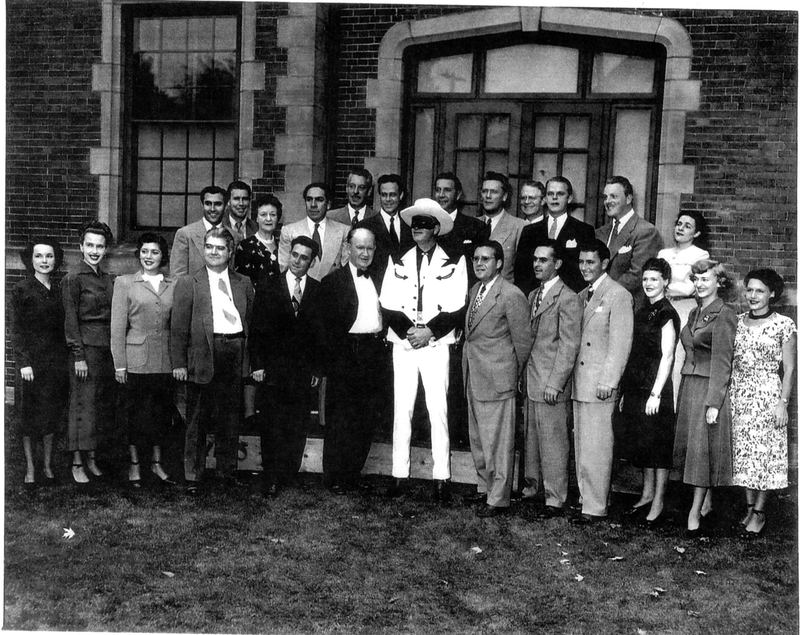
The station
The station began on June 3, 1925, as WGHP, named for its owner, Detroit advertising man George Harrison Phelps. In 1927 it was one of the sixteen stations that carried the first CBS network program. In 1930 the Kunsky-Trendle Broadcasting Company bought it, gave it the call letters WXYZ and brought it back into Detroit, with offices in the Maccabees Building on Woodward Avenue. Most of its shows came from the former Mendelson Mansion on East Jefferson Avenue.
On June 1, 1932, WXYZ left CBS to make way for more local programs, and that year it began producing its own radio dramas. The Lone Ranger premiered on January 31, 1933. In 1934 WXYZ was one of the four stations that founded the Mutual Broadcasting System, with WOR in New York, WGN in Chicago and WLW in Cincinnati. On September 29, 1935, it switched to NBC's Blue Network, but a contract kept The Lone Ranger on Mutual, so Detroit listeners tuned to CKLW across the river in Windsor, Ontario, to hear it. The Green Hornet followed on January 31, 1936, and Challenge of the Yukon on January 3, 1939.
The American Broadcasting Company bought WXYZ in 1946, along with WOOD in Grand Rapids and the Michigan Radio Network, for $3,650,000. In 1948 the station's people helped put WXYZ-TV, channel 7, on the air. In 1959 ABC moved its Detroit radio and television stations to Broadcast House in Southfield.
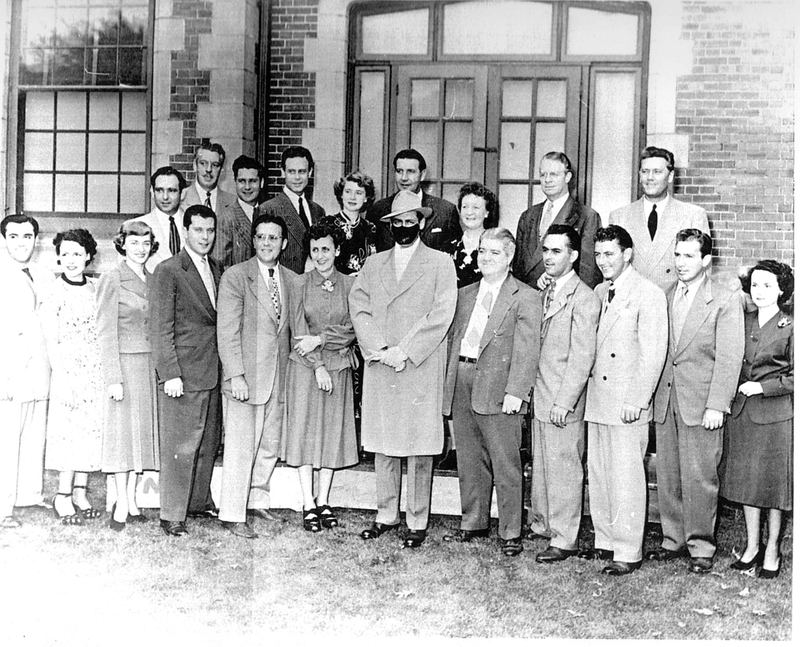
The shows
The Lone Ranger
The Lone Ranger was created at WXYZ in Detroit by station owner George W. Trendle and writer Fran Striker, and premiered January 31, 1933. Its success helped launch the Mutual network, and the show moved to NBC's Blue Network, later ABC, in 1942. Earle Graser voiced the masked man for some 1,300 episodes; after his death in 1941, narrator Brace Beemer took over the role. The theme was the finale of Rossini's William Tell Overture. The series ran to 2,956 episodes.
The Green Hornet
The Green Hornet came from WXYZ in Detroit, the same station that made The Lone Ranger. George W. Trendle and Fran Striker created it, and it premiered January 31, 1936. Newspaper publisher Britt Reid fought crooks in disguise, with his partner Kato at the wheel of the Black Beauty. On the radio, Britt was the Lone Ranger's great-nephew. Mutual carried it from 1938, then the Blue Network and ABC through September 8, 1950, and it came back briefly in late 1952.
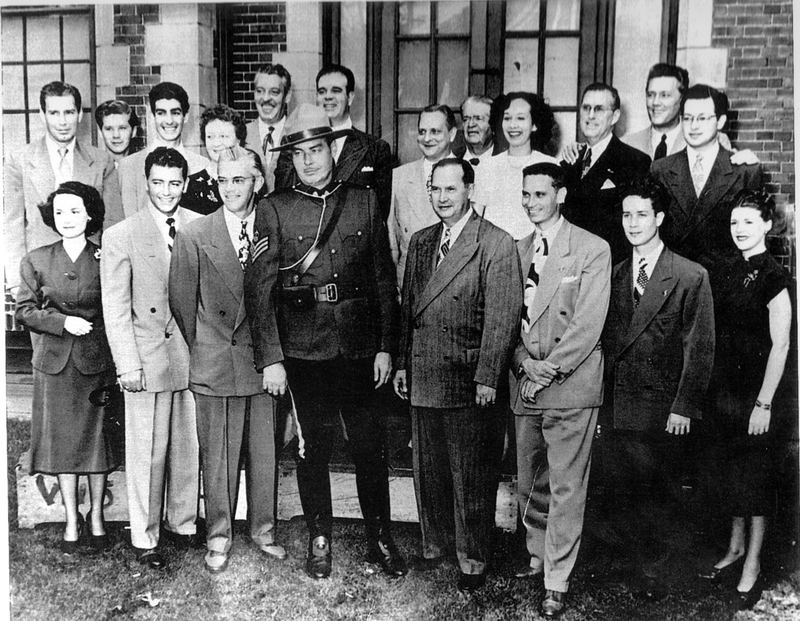
Challenge of the Yukon
After The Lone Ranger and The Green Hornet, WXYZ owner George W. Trendle wanted an adventure show with a dog as the hero. Challenge of the Yukon began in Detroit on January 3, 1939: Sergeant William Preston of the North-West Mounted Police and his lead sled dog, Yukon King. Once Quaker Oats signed on, it became a half hour on ABC in June 1947, then moved to Mutual in 1950, where it ran until June 1955. The theme was the overture to Reznicek's opera Donna Diana. In September 1950 it was renamed Sergeant Preston of the Yukon, and it went to television in 1955.
The people
George W. Trendle
George W. Trendle was president and station manager of Detroit's WXYZ, the station he and partner John Kunsky bought, which began producing its own radio dramas in 1932. From staff meetings there came The Lone Ranger, which Trendle claimed credit for creating, followed by The Green Hornet and Challenge of the Yukon. He later served as executive producer of The Lone Ranger on television.
James Jewell
A Detroit native, James Jewell joined WXYZ as an announcer in 1930 and soon became its dramatic director. He helped shape The Lone Ranger, is credited with choosing the William Tell Overture as its theme, and directed The Lone Ranger and The Green Hornet from their beginnings until 1938. Tonto's “Ke-mo sah-bee” is said to come from Camp Kee-Mo-Sah-Bee, a Michigan boys' camp owned by his father-in-law. In Chicago he went on to direct Jack Armstrong, the All-American Boy.
Fran Striker
Fran Striker was an early radio writer who worked at stations in Buffalo and Cleveland before landing at WXYZ in Detroit. Late in 1932 he began work on The Lone Ranger, eventually turning out about 156 scripts a year plus several Lone Ranger novels. He also wrote The Green Hornet, contributed scripts to Challenge of the Yukon, and later worked on the TV versions of The Lone Ranger and Sergeant Preston of the Yukon.
Earle Graser
Earle Graser joined Detroit station WXYZ as a bit player in 1932 and began playing the Lone Ranger in April 1933. He voiced the masked rider about 1,300 times and never missed a performance, even though each show went out live three times for different time zones. After Brace Beemer took over the part, the radio and TV versions kept using Graser's recorded voice for the famous "Hi Yo, Silver" shout.
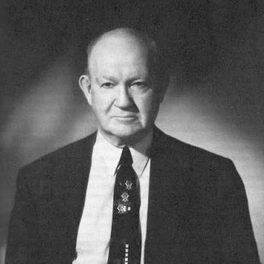
John Todd
John Todd came to radio after years in stock theater and on Broadway, joining the acting company at Detroit station WXYZ. On The Lone Ranger he took over the role of Tonto in 1933 and kept it for nearly the entire run, the only original cast member still there for the final 1954 broadcast. He also played Inspector Conrad, Sgt. Preston's superior, on Challenge of the Yukon, and Dan Reid on The Green Hornet.
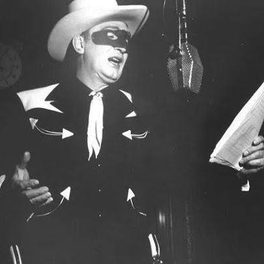
Brace Beemer
Brace Beemer was a radio actor and announcer at WXYZ in Detroit, best remembered as the voice of the Lone Ranger. He took over the part in 1941 and kept it until the series' last new episode aired in 1954. Once that run ended, he briefly played Sergeant William Preston on Challenge of the Yukon.
Al Hodge
Al Hodge was radio's first Green Hornet, playing Britt Reid at WXYZ in Detroit from January 1936 until January 1943. Around the station he also wrote and read daily editorials, called football games, wrote advertising copy, worked as a disc jockey, and produced dramas and documentaries, among them The Lone Ranger and Challenge of the Yukon. Television viewers later knew him as Captain Video on the DuMont network.
Jack McCarthy
Jack McCarthy grew up on a farm near Parnell, Michigan, and announced at Detroit's WMBC and WXYZ. In the late 1930s he played secret agent Ned Jordan in a Fran Striker serial, and just before World War II he became WXYZ's chief announcer. After serving as a Marine lieutenant, running an Armed Forces Radio station on Eniwetok Atoll, he played the Green Hornet from 1947 until the series ended in December 1952. He later moved to New York, where he read the news on WPIX as John E. McCarthy.
Paul Sutton
Paul Sutton was a radio actor and writer, best known as Sergeant William Preston on Challenge of the Yukon, a part he took over in 1947 when the show became a half hour. He worked at WXYZ in Detroit, has been credited with writing episodes of The Green Hornet, and collaborated on the 1938 serial The Life of Mary Sothern. He also appeared in a string of westerns and low-budget films.
Fred Foy
Fred Foy got his start at Detroit radio and joined WXYZ in 1942. From 1948 until the series ended in 1954 he was the announcer and narrator of The Lone Ranger, and he even stepped into the title role for one 1954 broadcast. He was also heard on The Green Hornet and Challenge of the Yukon, later hosted ABC's Theatre 5, and announced The Dick Cavett Show on television.
Landmark broadcasts
Tap a title to play it.
- The Lone Ranger: “A Frame for Murder”
The oldest Lone Ranger broadcast in Radio Days, two days after the premiere. - The Lone Ranger: “Sixty Days for Life”
Earle Graser's last broadcast as the Lone Ranger. - The Lone Ranger: “Homesteader's Ruse”
The first show after Graser's death: the wounded Ranger barely speaks as Brace Beemer takes over. - The Lone Ranger: “The Lone Ranger Moves”
The Ranger finds his voice again, now Brace Beemer's. - Challenge of the Yukon: “The Wolf Cub”
Sergeant Preston's first half-hour show and first on a national network. - The Lone Ranger: “The Meadows Sisters”
Fred Foy's first show as the announcer. - The Green Hornet: “Axford's Romantic Disaster”
The last Green Hornet broadcast. - The Lone Ranger: “Burly Scott's Sacrifice”
Fred Foy plays the Lone Ranger, the only time he did.
Photos: newspaper cast photos from the Radio Days Museum Archive; who's pictured from Dennis Wright. Dates from when Jack McCarthy and Paul Sutton played their parts together (1947 to 1952). Sources: The Lone Ranger, Wikipedia; The Green Hornet, Wikipedia; Challenge of the Yukon, Wikipedia; George W. Trendle, Wikipedia; James Jewell (director), Wikipedia; Fran Striker, Wikipedia; Earle Graser, Wikipedia; John Todd (actor), Wikipedia; Brace Beemer, Wikipedia; Al Hodge, Wikipedia; John Edward McCarthy, Wikipedia; Paul Sutton, Wikipedia; Happy Birthday, Paul Sutton!, Radio Spirits; Fred Foy, Wikipedia; WXYT (AM), Wikipedia; RadioGOLDINdex (landmark broadcasts).